
30th Mar 2026
The Best Walkie Talkies for UK Farms and Agriculture
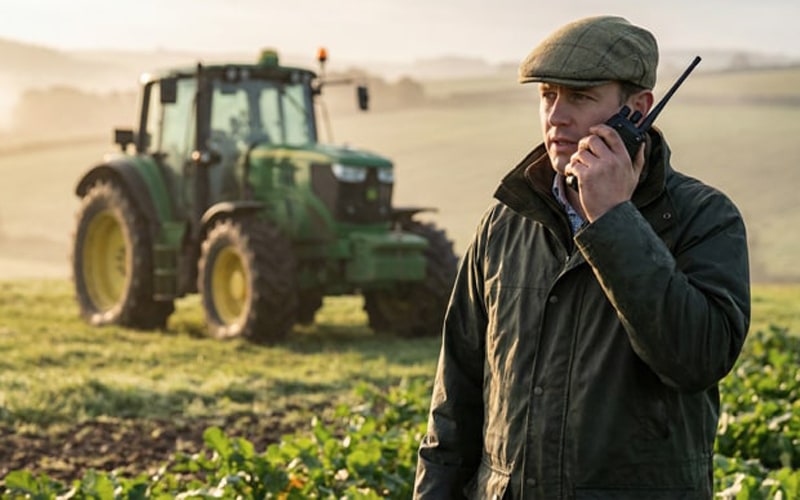
Tested and Reviewed by The Baofeng UK Radio Experts | Agricultural Communication Guide | Read time: 7 mins
Choosing the right walkie talkies for farming can make day-to-day work on a UK farm much easier. Whether you are coordinating livestock checks, keeping in touch between tractors and yards, or managing staff across fields and buildings, a reliable radio system is often simpler and faster than relying on mobile phones alone.
The challenge is knowing which type of radio actually suits farm work. A small licence-free set may be enough for a compact holding, while a larger mixed-use farm may need something tougher, more powerful, or better suited to difficult ground. The best choice depends on your land, buildings, team size, and how you plan to use the radios in real conditions.
Why Farms Still Benefit from Walkie Talkies
Farms are one of the clearest examples of where two-way radios still make practical sense. Mobile coverage can be patchy in rural areas, gloves and muddy hands are not ideal for touchscreen use, and quick group communication is often more important than long conversations.
For everyday farm work, farm walkie talkies can help with:
- calling in machinery movements
- coordinating workers between sheds, gates and fields
- checking in during lambing, calving or harvest
- managing deliveries, contractors or visitors on site
- keeping contact during events, shoots or seasonal work
They are especially useful when several people need to hear the same message at once, rather than one person making repeated phone calls.
What Matters Most When Choosing Farm Walkie Talkies
Real-world range matters more than box claims
Range is often the first thing buyers look at, but it is also the most misunderstood. On a farm, actual performance depends on hills, trees, metal buildings, stone walls, machinery, weather, and how the radio is being carried or used. Even a good radio will perform differently in open fields than it will around sheds, grain stores or valleys.
That is why the best walkie talkies for farms are not necessarily the ones with the boldest headline range claims. What matters more is whether they can give you dependable communication across your own working areas, not idealised line-of-sight figures.
Durability and ease of use
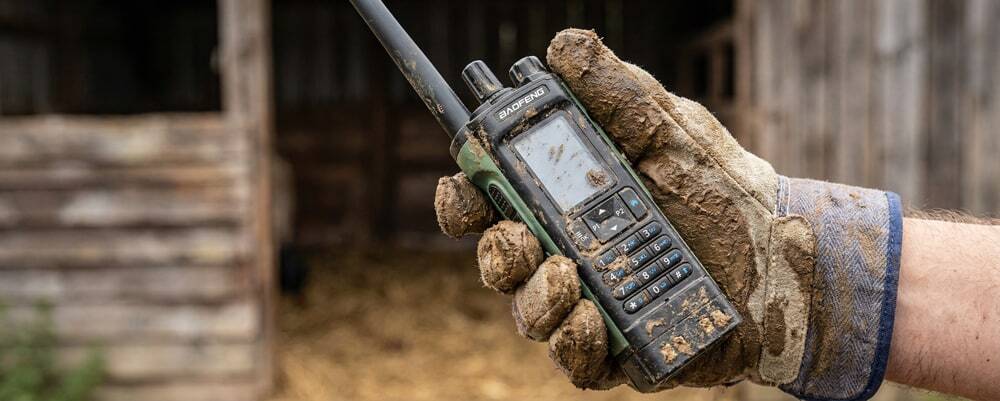
Farm radios need to cope with dust, knocks, damp conditions, and being picked up quickly throughout the day. A practical farm radio should feel easy to use with gloves, have a battery that comfortably lasts a working shift, and be sturdy enough for vehicles, jackets, barns and pockets.
Look for features such as:
- solid casing
- clear physical buttons
- strong battery life
- loud speaker output
- simple charging arrangements
- headset or earpiece options where needed
Battery life for long shifts
Battery performance matters more on farms than many buyers expect. Harvest, lambing and general yard work can mean long days, early starts and limited time to recharge. A radio that only performs well for short indoor use can become frustrating very quickly.
For agriculture, it is usually better to prioritise consistent battery life and easy charging over extra features you may never use.
Coverage across buildings, yards and fields
Some farms mainly need communication between house, yard and outbuildings. Others need coverage across wider land, separate teams, livestock units or vehicles. This is where the type of radio matters.
A small licence-free unit may work well for a compact site. A larger farm with difficult terrain may need a more capable setup or a licensed solution, especially where buildings and distance make communication harder. Ofcom notes that PMR446 licence-exempt radios in the UK are short-range, low-power devices and are limited to 0.5W ERP, mobile-only use.
The Main Radio Types for UK Farms
Licence-free PMR446 radios
For many smaller farms, licence-free PMR446 radios are the easiest starting point. In the UK, compliant PMR446 radios can be used without an individual licence, but they are intended for short-range, low-power operation and must meet the relevant UK conditions. Ofcom’s guidance states that PMR446 is licence-exempt only within the specified rules, including 0.5W ERP maximum and mobile-only use.
These radios are often suitable for:
- smaller farms
- yard-to-yard communication
- staff coordination on one main site
- casual or seasonal farm use
- buyers who want a simple, lower-cost option
Their biggest strengths are ease of use, low running cost and straightforward setup. Their limitation is that they may struggle on larger farms with challenging terrain or heavy building obstruction.
Higher-powered and licensed radios
Some farms need more than a basic licence-free setup. Larger sites, more demanding terrain, or more consistent use across buildings and fields may justify a licensed radio system. Ofcom states that certain radio equipment requires a licence depending on the type of equipment and use.
This is often more relevant for:
- larger agricultural estates
- farms with multiple teams operating at once
- sites with difficult coverage
- business-critical communication where consistency matters
The main advantage is better suitability for more demanding environments. The trade-off is higher complexity, the need to make sure the equipment and use are appropriate for UK rules, and potentially higher cost.
Amateur or ham radios
Some BAOFENG models are often discussed in relation to amateur radio, but this is not the same as buying a simple licence-free farm walkie talkie. Amateur radio equipment and operation follow different rules and should not be treated as a universal farm communication shortcut. In the UK, some radio uses require the correct Ofcom licence.
For most farms looking for practical everyday team communication, the safer starting point is usually either:
- a compliant licence-free PMR446 radio, or
- a properly chosen licensed business-use radio setup where needed
Who Should Buy Which Type of Farm Radio
Small farms and compact holdings
If most of your work happens around one yard, a few buildings, nearby paddocks or short vehicle routes, a good PMR446 set is often the most sensible option. It keeps costs down and avoids unnecessary complexity.
Mixed farms with buildings and moderate land spread
If you need coverage between sheds, workshops, feed stores, livestock areas and nearby fields, look for a tougher radio with better battery life, good audio clarity and dependable real-world performance rather than the cheapest set available.
Large farms and estates
If your land is more spread out, your teams work in separate areas, or communication is important for safety and efficiency, a more capable licensed setup may be worth considering. That is especially true if you repeatedly struggle with weak coverage from licence-free radios.
Seasonal staff and temporary teams
Where extra workers join during lambing, calving, harvest or events, simple radios are often best. Easy charging, channel simplicity and clear labelling can matter more than advanced features.
Common Mistakes Buyers Make
Focusing only on maximum range
This is the biggest mistake. A radio advertised with a large range figure may not perform that way across real farmland. Buildings, dip valleys, tree lines and steel structures all make a difference.
Assuming all radios are licence-free
Not every handheld radio can be used in the same way. In the UK, only equipment that meets the licence-exempt conditions can be used on that basis, and some radios fall under different licensing requirements.
Buying the cheapest option for full-day use
A very cheap set may be fine for occasional short communication, but farms usually need radios that can handle dirt, repetitive use, vehicle movement and long shifts.
Ignoring accessories
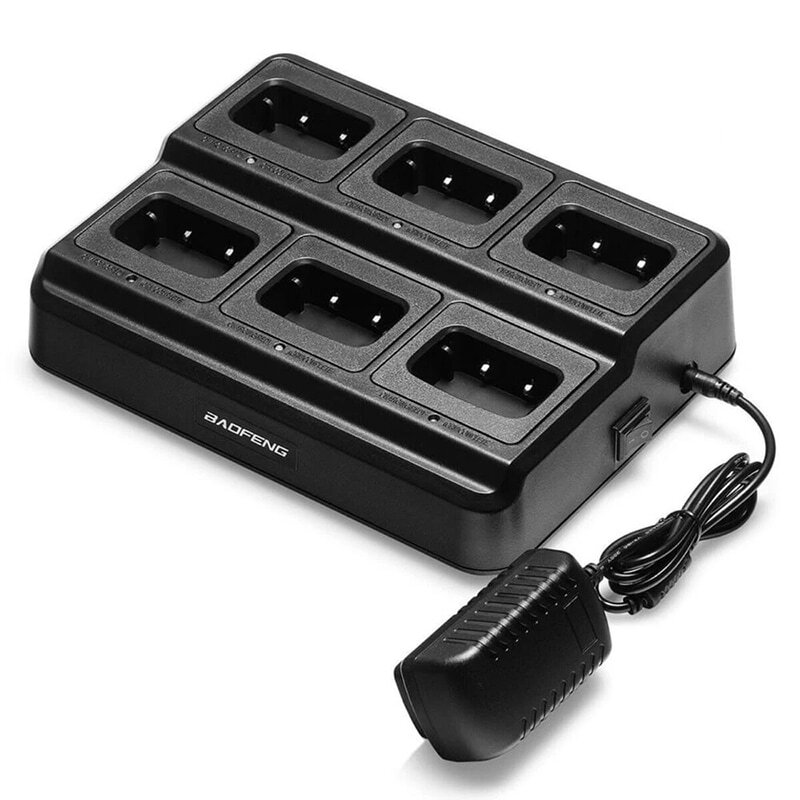
Accessories like speaker mics, earpieces, spare batteries, belt clips and vehicle chargers can make a big difference in everyday use. On a farm, convenience often determines whether radios actually get used properly.
What BAOFENG Can Offer for Farm Users
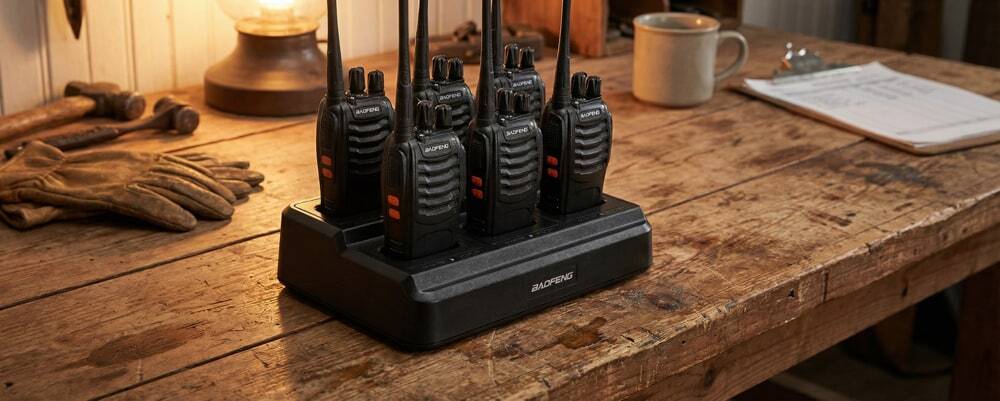
For UK buyers who want a practical and affordable option, BAOFENG radios can make sense where the priority is value for money rather than premium-brand pricing. That is especially relevant for beginners, small teams, seasonal use, or farms that want multiple handsets without overspending.
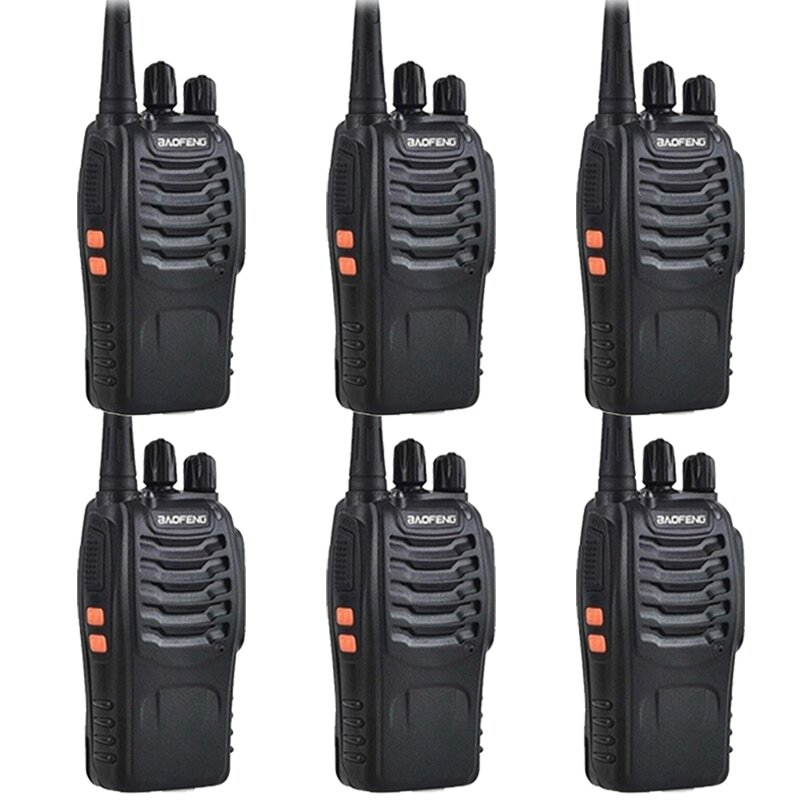
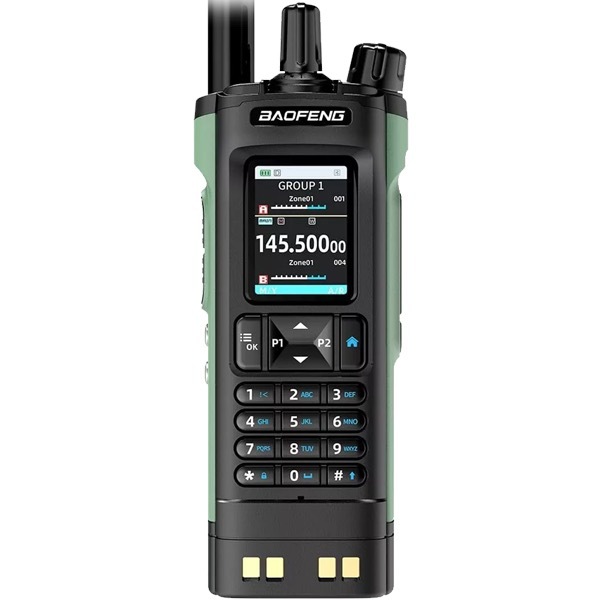
The key is choosing the right type of set for the job. Below are our top recommended models and accessories specifically chosen for the demands of UK agricultural environments:
A Simple Way to Choose the Best Walkie Talkies for Farming
- How big is the area you actually need to cover? Think in terms of yard, buildings, fields and routes used every day, not the total acreage on paper.
- What blocks signal on your farm? Stone buildings, steel sheds, banking, woodland and terrain all affect radio performance.
- How many people need radios at once? A couple of handsets for family use is different from a team of staff during busy periods.
- How long do they need to last each day? Long battery life matters on farms with early starts and seasonal peaks.
- Do you need simple or more serious communication? For casual coordination, a basic set may be enough. For regular operational use, it is worth paying more attention to reliability and suitability.
Final Thoughts
The best walkie talkies for farming are the ones that fit the way your farm actually works. For some UK farms, that means a simple licence-free radio for yard and local field communication. For others, it means investing in something more capable because terrain, buildings and day-to-day demands make communication harder.
The most useful choice is usually not the one with the biggest marketing claims. It is the one that gives you clear, reliable contact where your team genuinely needs it.
Frequently Asked Questions (FAQs)
Are walkie talkies useful on farms?
Yes, they are often very useful on farms because they allow fast communication between workers, vehicles, buildings and fields without relying entirely on mobile phones.
What are the best walkie talkies for farming in the UK?
The best option depends on farm size, terrain, buildings and daily use. Smaller farms may be fine with licence-free radios, while larger or more demanding sites may need a more capable setup.
Are all farm walkie talkies licence-free in the UK?
No. In the UK, only radios that meet the relevant licence-exempt conditions can be used licence-free. Some other radios and uses require the correct licence.
How far do farm walkie talkies work?
There is no single fixed answer. Real-world range depends on the land, buildings, obstacles, weather conditions and the type of radio being used.
Are BAOFENG radios good for farms?
They can be a good value option for farms that want affordable, practical radios, especially for lighter everyday use. The main thing is choosing a model and radio type that suits your farm and UK usage requirements.
Are mobile phones better than two-way radios on farms?
Not always. Phones are useful for longer conversations and external contact, but walkie talkies are often better for instant team communication, group coordination and rural working conditions.