
11th Feb 2026
The Ultimate Guide to Walkie Talkies: Clear & Effective Use
In a world dominated by mobile phones and text messaging, many people are surprised to learn that using walkie talkies remains one of the most reliable ways to stay connected. From outdoor adventures and family outings to construction sites, security personnel, and emergency services, walkie talkies continue to play a vital role in modern radio communication.
This ultimate guide explains how walkie talkies work, why they remain relevant, and how to use them properly for effective communication.
What Are Walkie Talkies?
Walkie talkies, also known as two way radios, are battery powered communication devices that allow users to talk, speak, and communicate instantly over radio waves. Unlike phones, these devices do not rely on cellular networks. Instead, they transmit radio signals directly between devices operating on the same frequency band.
A walkie talkie is designed for group communication, allowing multiple users to share information quickly on a selected channel.
How Walkie Talkies Work
To understand how walkie talkies work, it helps to look at basic radio working principles.
When using a walkie talkie, your voice is picked up by the microphone, converted into an electrical signal, and sent via transmission over specific radio frequencies. The signal is received by other radios tuned to the same frequency or channel frequency, producing clear audio output.
Most walkie talkies operate in push to talk (PTT) mode. You press the PTT button (also called the talk button) to transmit, release it when finished speaking, and return to listening mode.
Because of this system, only one person can talk at a time on a channel.
Frequency, Channels, and Signal Range
Frequency and Channel Basics
- A frequency is a specific position within a frequency band
- A channel is a preset that uses one or more specific radio frequencies
- Different frequencies prevent interference from other users
The walkie talkies reach varies. Range depends on terrain, obstacles, antenna design, and whether the device uses higher power output. Open areas allow stronger signal coverage, while buildings and hills reduce range.
Walkie Talkie Codes and Language
To streamline communication, radio users rely on walkie talkie codes, also known as two way radio codes.
These codes, common codes, and standard phrases reduce confusion and improve speed. For example:
- “Message received”
- “Message understood”
- “Stand by”
- “Over”
Using proper walkie talkie language helps ensure that every message is clear, especially in public safety or emergency channels, where mistakes can save lives or cost them.
Common Radio Protocols
| Code Word | Meaning |
|---|---|
| "Over" | I have finished speaking, awaiting a reply. |
| "Out" | I have finished speaking, no reply needed. |
| "Copy" / "Roger" | I have understood your message. |
| "Stand By" | Please wait, I am busy/checking. |
Walkie Talkies vs Mobile Phones
While mobile phones support calls, apps, and text messaging, walkie talkies offer unique advantages:
- Instant communication without dialing
- No network dependency
- Reliable during disasters
- Better for casual use, recreational use, and professional environments
For two way radio users, walkie talkies are faster and more dependable than phones in critical situations.
Digital Radios and Modern Devices
Modern digital radios have expanded what walkies talkies can do. Today’s professional radios often include:
- Clearer audio quality
- Secure radio signals
- Improved battery life
- Enhanced lcd display
- Better resistance to interference
Despite technological upgrades, the core device function remains the same: instant communication via radio.
Safety, Privacy, and Responsible Use
Because walkie talkies operate on shared radio frequencies, conversations may be heard by other users on the same frequency band. Avoid sharing sensitive information unless using encrypted or professional systems.
Proper channel selection and understanding emergency channels are essential, especially when working alongside emergency services.
Top Recommended Baofeng Walkie Talkies
Best for Beginners: BF-888S

Best For: Simple, Licence-Free Use
The perfect entry-level radio. No screens, no complex menus. Just turn the dial to one of the 16 pre-set channels and talk instantly.
Key Feature: Ready to use out of the box.
Best All-Rounder: UV-5RH Pro
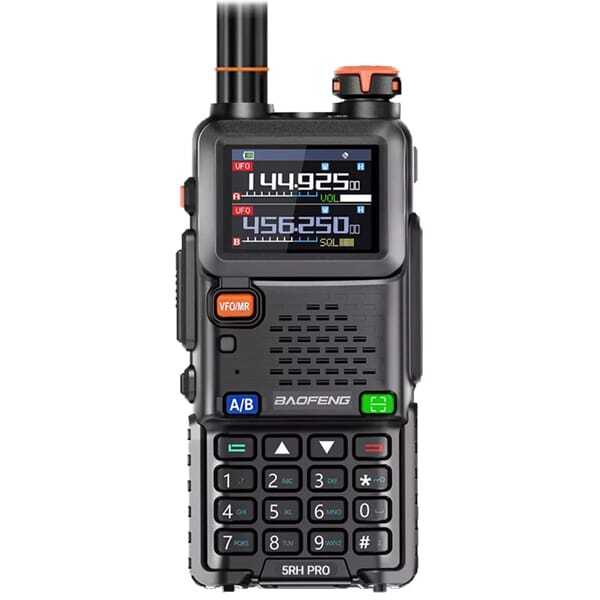
Best For: Power Users & Distance
A modern classic. Featuring high power output, a large colour screen, and USB-C charging. It covers both VHF and UHF bands for maximum versatility.
Key Feature: One-Touch Frequency Search
Best Portable: UV-5R Mini
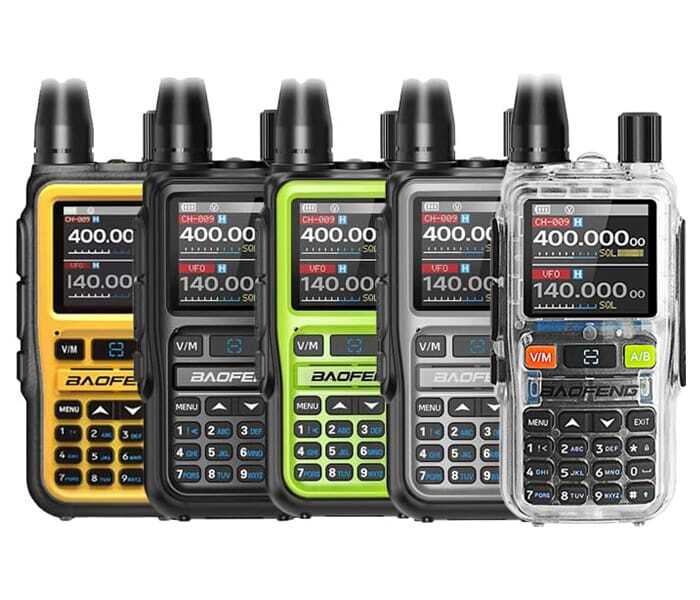
Best For: Hiking & Travel
Don't let the size fool you. This tiny radio packs a punch. It fits in any pocket and can be programmed via Bluetooth on your phone.
Key Feature: Ultra-Compact & App Control
Best Audio Clarity: DM-32 Digital
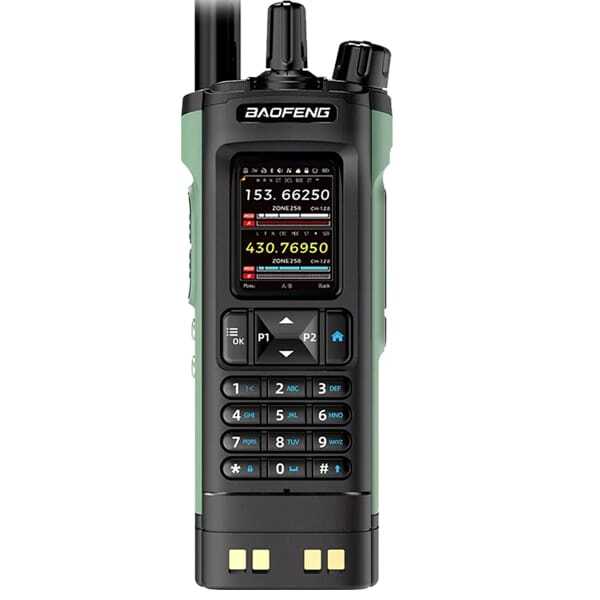
Best For: Security & Business
Experience static-free audio with DMR digital technology. It offers better privacy and battery efficiency than standard analogue radios.
Key Feature: Crystal Clear Digital Audio
Choosing the Best Walkie Talkie
When selecting the best walkie talkie, consider:
- Intended use (family outings, construction, security)
- Required range and signal strength
- Durability and battery powered design
- Audio clarity and microphone sensitivity
Different environments require different two way radios, so match the radio to your needs.
Final Thoughts
Even as technology evolves, walkie talkies remain a powerful tool for fast, reliable, and effective communication. Whether for outdoor adventures, professional coordination, or safety, using walkie talkies provides a simple, proven way to communicate, transmit clear messages, and maintain connection when it matters most.
By understanding radio communication, frequencies, channels, and proper codes, anyone can use walkie talkies confidently and efficiently.
Frequently Asked Questions
Do walkie talkies work without phone signal?
Yes. Walkie talkies transmit radio waves directly between devices. They do not use cell towers or the internet, making them perfect for remote areas where phones fail.
What is the "PTT" button?
PTT stands for "Push-to-Talk." Unlike a phone call where you can talk and listen at the same time, on a radio you must push this button to transmit your voice, and release it to hear the reply.
Can other people hear my conversation?
On standard analogue channels, yes. If someone is tuned to the same frequency within range, they can hear you. For private conversations, look for "Digital (DMR)" radios or use privacy codes (CTCSS/DCS).